
Western Swing on Horseback: Marketing, Music & the Swift Jewel Cowboys
A cowboy band built to sell shortening somehow rode straight into Western Swing history.
One of the little corners of Western Swing history that stopped me in my tracks this week was the story of the Swift Jewel Cowboys.
Yes , Western Swing on horseback.
The Swift Jewel Cowboys were one of Memphis’ rare country music acts from the 1930s and 1940s to actually make commercial recordings. They had the cowboy look, the radio presence, the rodeo appearances, and the whole promotional machine behind them. But musically, they were not just some old-time string band in cowboy hats.
They swung.
While many Western Swing bands looked to Texas dance halls for inspiration, the Swift Jewel Cowboys weren’t afraid to borrow from the sophisticated sounds of big band jazz. And you know how I adore an outlier.
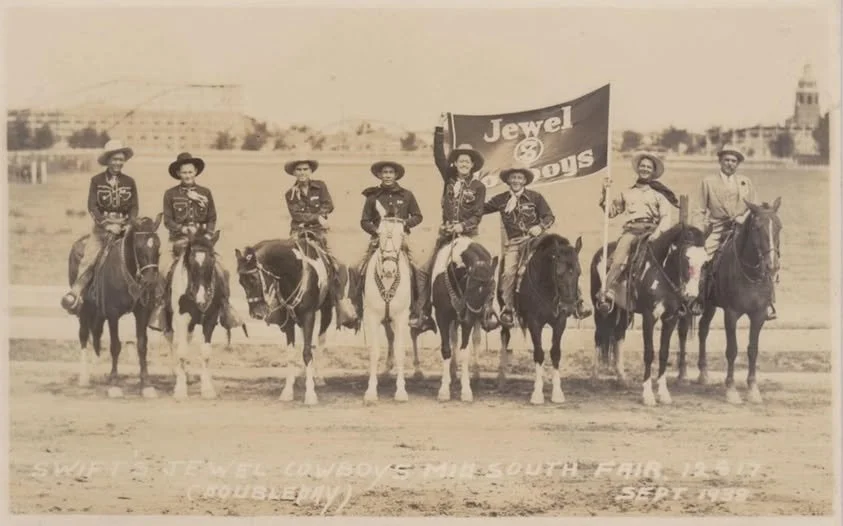
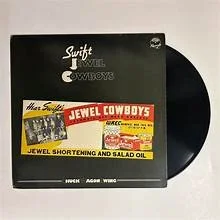
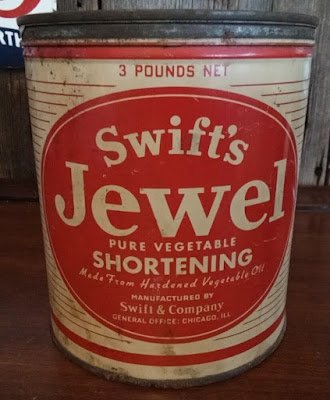
The group started in Texas in 1933 as a promotional idea for Jewel Oil & Shortening Company. Frank B. Collins, who managed the company’s Houston refinery, wanted a way to promote Jewel products with a down-home feel. So what did they do?
They built a cowboy band.
At first, the Swift Jewel Cowboys played around Houston at grocery stores, supermarket openings, and promotional events. People could even use a Swift Jewel packet-top as a kind of free ticket to see the band. It was part advertisement, part entertainment, and eventually, part Western Swing history.
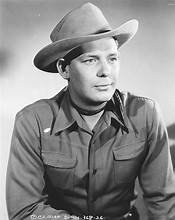
Some important names passed through early on, including Texas Jim Lewis and steel guitarist Leon McAuliffe, who would later become a major part of Bob Wills’ Texas Playboys and a legend in his own right. That alone tells you this was not just a novelty act. There were serious players involved.
By late 1934, the band had moved to Memphis, where they became a regular presence on the radio. They broadcast daily on WMC, later moved to WREC, and could also be heard in places like Little Rock and Nashville. For a time in 1938, their morning show was even carried on the CBS network.
And then there is the horseback part.
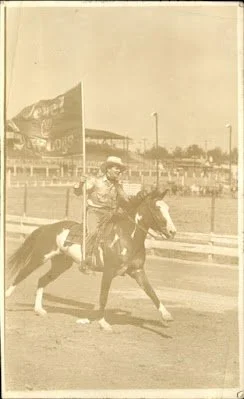
Once the band was settled in Memphis, their appearances expanded beyond stores and radio. They played rodeos, fairs, vaudeville shows, schoolhouses, hospitals, and who knows how many other places across the Mid-South. To be part of the band, you didn’t just have to sing, write, and play. According to the history, you also had to be able to ride.
That is such a wild and wonderful image: a Western Swing band that could play hot, jazz-leaning cowboy music and look the part from the saddle.
In July 1939, the Swift Jewel Cowboys recorded for Vocalion Records at the Gayoso Hotel in Memphis. Their recordings included titles like “Willie the Weeper,” “Memphis Oomph! (Is It True),” “Memphis Blues,” “Kansas City Blues,” and “Fan It.” Some songs played into the cowboy image, while others showed just how jazzy and swinging this band really was.
By 1942, World War II had changed the road for everyone. Travel restrictions and the draft made it harder to keep the band going, and the Swift Jewel Cowboys played their farewell concert at the Memphis Fairgrounds on the Fourth of July.
They may have started as a way to sell shortening and oil, but they left behind something far more interesting: a snapshot of how music, radio, advertising, cowboy imagery, and Western Swing all rode together through the 1930s South.
That is the kind of story I love finding — a little strange, a little flashy, deeply regional, and full of music.
