

Adolph Hofner: The Texas Swing Pioneer Who Took His Sound to California
How a Czech-Texan bandleader carried polkas, steel guitar, and Western Swing into 1940s California
There is something intoxicating about discovering a voice from the past that feels as though it was meant to cross your path. For me, that voice belongs to Adolph Hofner, a Texas Western Swing pioneer whose music brought together Czech polkas, country dance rhythms, and the unmistakable cry of the steel guitar.
Hofner is more than another name in the history of Western Swing. He represents what can happen when musical traditions meet, mingle, and become something entirely their own.
His story is rooted in Texas, but an important chapter played out in California through Hollywood recording sessions, Los Angeles performances, radio, and the dance halls that carried Western Swing to audiences throughout the West Coast.
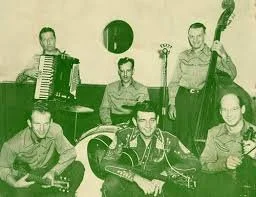
Adolf Hofner - Ep #32 MOW
My Introduction to Adolph Hofner
My first encounter with Hofner’s music was not a polished introduction. It was random, warm, and wrapped in the kind of nostalgia that makes you feel as though you have stepped into another time.
I discovered him through Dave Stuckey’s album Get a Load of This, specifically his recording of “I’ll Keep My Old Guitar.” It sounded like the ghost of an old jukebox, the kind that might have sat in a roadside bar where the beer was cheap and the stories were priceless.
Then my friend George Fischer, a radio host with an ear for legends, pointed me toward a rare interview with Hofner. Recorded by Chris Strachwitz during the 1970s and preserved by the Arhoolie Foundation, the conversation offered a window into Hofner’s personality, humor, music, and memories.
It was a goldmine.
From Czech Polkas to Western Swing
Adolph Hofner was born on June 8, 1916, in Moulton, Texas. That date immediately stood out to me because we share the same birthday. Make of that what you will.
He grew up in a Czech and German household surrounded by old-world polkas, brass bands, and dance music. After his family moved to San Antonio, Hofner and his younger brother Emil began playing music together. Adolph played guitar and sang, while Emil became a steel guitarist.
Those early influences became a defining part of Hofner’s sound. He did not leave the music of his childhood behind when he entered the world of country music. He folded it into Western Swing.
The result was music that could move easily between a Texas dance hall, a Czech polka gathering, and a country radio broadcast. Hofner helped demonstrate that Western Swing was never created from one isolated tradition. It was built through cultural exchange, experimentation, and the musicians willing to bring different sounds onto the same dance floor.
Adolph Hofner’s California Chapter
Hofner’s California story began with a series of Hollywood recording sessions in February and March 1942. With his San Antonians, he recorded titles including “Swing With the Music,” “Sage Brush Shuffle,” and “Alamo Steel Serenade.”
Later in the decade, Hofner brought his band to the Los Angeles area and worked there for nearly two years before returning to Texas.
California already had a growing Western Swing culture, but Hofner brought something distinctive to it. His combination of Texas Swing, Czech dance music, smooth vocals, fiddle, accordion, and steel guitar added another voice to the scene taking shape across the state.
His time in California was not merely an honorable mention in a Texas career. It was a meaningful chapter in the wider movement of Western Swing through radio studios, recording rooms, dance halls, and communities far beyond its original home.
California has a way of quietly shaping music and culture without always receiving credit for it. The state became a meeting place for musicians arriving from Texas, Oklahoma, the Midwest, and beyond. Artists carried their regional traditions west, then adapted them for new stages and new audiences.
Hofner was part of that movement.
A Legacy Built Through Cultural Exchange
Adolph Hofner’s contribution to Western Swing reaches beyond any single recording or performance. His music is evidence that tradition does not have to remain frozen in place to be honored.
He carried the sounds of his Czech-Texan upbringing into country music without sanding away what made them distinct. In doing so, he helped create music that was regional and expansive, traditional and inventive.
Hofner was later inducted into the Western Swing Society Hall of Fame in Sacramento, where I was inducted in 2023. That shared connection means a great deal to me, particularly because California’s role in Western Swing history is still too often overlooked.
Adolph Hofner is not simply a figure from the past. He is a reminder of what becomes possible when musicians remain connected to where they came from while allowing the music to travel somewhere new.
His voice, rhythms, and steel guitar still carry the energy of crowded dance floors and radios glowing late into the night.
The music did not disappear.
You just have to know where to listen.
Happy Birthday to us!
Listen to Adolf Hofner on Mae Out West
Buy Adolf Hofner Music - Amazon
https://amzn.to/4uqiF9x - Link helps support the show
https://amzn.to/4e6VHhz - Link helps support the show
SUPPORT HERITAGE
Mae Out West is independently produced cultural programming dedicated to Western Swing, honky tonk, classic country, roots music, and the artists carrying these traditions forward.
Enjoyed the feature? Leave a tip or support the continued preservation and promotion of heritage music.
Venmo: https://account.venmo.com/u/maemccoy
PayPal:https://www.paypal.com/ncp/payment/4DV6GL7PZ5ZNU
Sponsorship and partnership inquiries are also welcome.